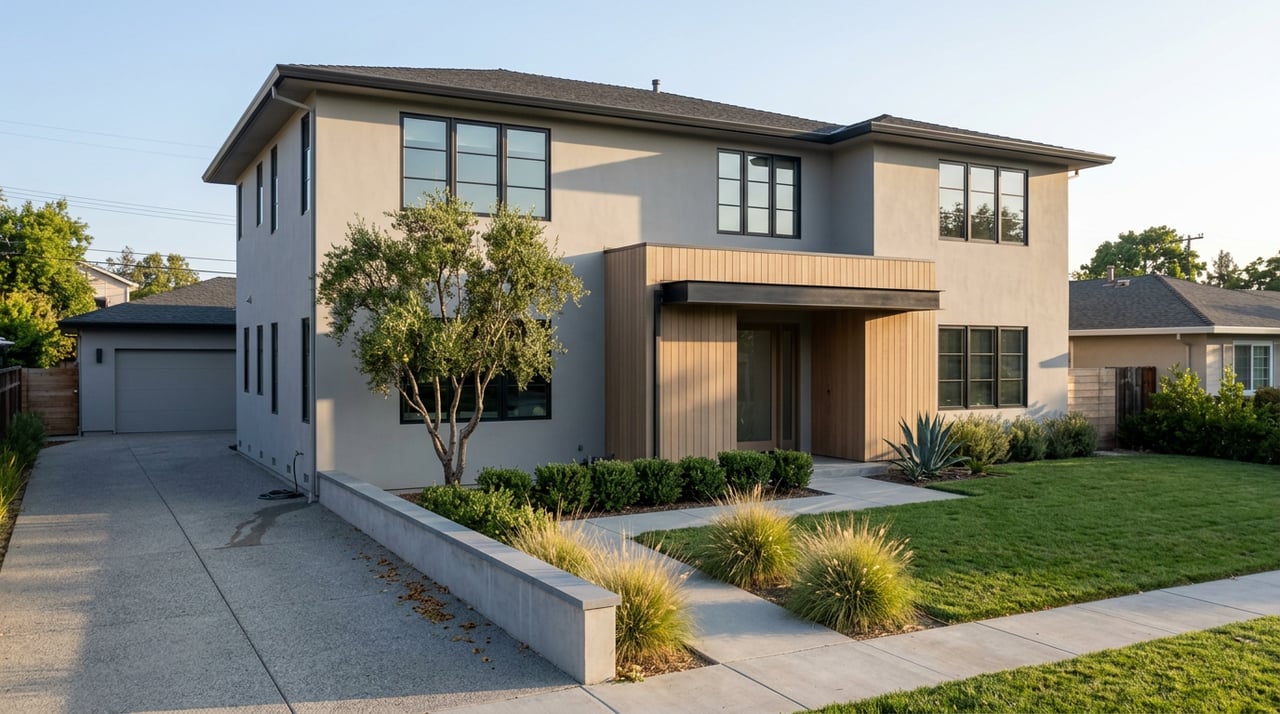
A buyer closes escrow on a home in Elk Grove, moves in, and a few months later opens a supplemental tax bill that's a few hundred dollars higher than the number their lender quoted at underwriting. Nothing went wrong in the transaction. The home simply sits inside one of the city's Community Facilities Districts, and that district assessment is part of the property's carrying costs.
This happens often enough in Elk Grove that it's worth understanding before you fall in love with a floor plan. Two homes can list at the same price, sit three streets apart, and carry different total monthly costs for the life of the loan. The difference has nothing to do with square footage, lot size, or school assignment. It comes down to a single fact: whether the parcel existed inside city limits before Elk Grove incorporated in 2000, or whether it was built afterward and annexed into a special tax district.
How District Boundaries Affect Costs
Elk Grove incorporated as a city in 2000. According to Elk Grove News, homes built before that date, largely in areas like Old Town Elk Grove and the Franklin neighborhood southwest of downtown, generally sit outside the city's Community Facilities Districts and pay standard property tax with no CFD add-on. Newer developments annexed into those districts after incorporation pay Mello-Roos taxes and special assessments on top of the base rate.
That distinction matters when comparing annual costs. According to Elk Grove Daily News, on May 27, 2026, the Elk Grove City Council unanimously approved the annual levy for the 2026-27 fiscal year across seven special tax and assessment districts, with no public opposition recorded at the meeting. The city's finance team told council members the levies are structured to keep pace with rising maintenance costs and to "maintain current service levels" as the city continues to grow, in the words of the presenting analyst quoted in Elk Grove Daily News. The approved levies add to the annual cost of homes in the affected districts.
The Districts Doing the Work
Elk Grove administers seven separate districts, and it's worth knowing them by name if you're shopping newer construction:
| District | What it funds | Notable terms |
|---|---|---|
| CFD 2002-1 (East Franklin) | Infrastructure for the East Franklin growth area | Direct levy on parcel tax bills |
| CFD 2003-1 (Poppy Ridge) | Infrastructure for the Poppy Ridge development | Direct levy on parcel tax bills |
| CFD 2005-1 (Laguna Ridge) | Streets, water, drainage, parks, and a portion of a future civic center | According to City of Elk Grove, infrastructure tax capped at $965 per single-family unit annually, rising 2% each July 1, not levied past fiscal year 2050-51 |
| CFD 2005-1 Maintenance Services | Landscaping, parks, community and recreation facilities within Laguna Ridge | Escalates with CPI, levied in perpetuity |
| CFD 2003-2 (Police Services) | Public safety services in newer development areas | Adjusted annually for inflation |
| CFD 2006-1 (Maintenance Services) | Parkways, parks, medians, and community facilities citywide, excluding older core areas | Adjusted annually for inflation |
| Street Maintenance & Street Lighting Districts No. 1 | Ongoing road and lighting upkeep in annexed areas |
The city's own report on this year's levy flagged something specific to Laguna Ridge: the maintenance assessment there may eventually need to climb to the full amount the district is legally allowed to charge, not because anything is going wrong, but because the maintenance obligations in that area are still catching up to the pace of new construction. According to City of Elk Grove, Beazer Homes and The New Home Company have active reimbursement agreements tied to CFD 2005-1 bonds, which tells you the district is still very much in build-out, not winding down.
What Stacking Actually Looks Like on a Bill
None of this is theoretical money. A single Elk Grove parcel inside one of these districts can carry more than one CFD line item at the same time. It's not unusual to see a school-related facilities charge stacked with a separate city infrastructure charge on the same tax bill, and that's before counting a maintenance or police services assessment layered on top. Add those up across a newer subdivision and they add to the base property tax rate.
None of these charges are optional once you own the property. They're collected as a direct levy on the same tax bill as your regular property tax, and under the Mello-Roos Community Facilities Act, they're not subject to Proposition 13's 1% cap or its 2% annual increase limit. That's the entire reason they exist. A developer who lacks the upfront capital to build roads, sewers, and parks finances that construction through bonds, and, according to My CA Home Loan, the CFD is how those bonds get repaid, typically over 25 to 40 years.
How Unpaid Assessments Can Lead to Foreclosure
The foreclosure timeline is another factor to consider before closing. If a homeowner falls behind on regular property tax in California, the county generally has a timeline for initiating a tax sale. Unpaid special tax assessments can trigger foreclosure proceedings. That's one more reason to know exactly what you're signing up for at the closing table rather than discovering it on a bill months later.
State law does put a disclosure mechanism in place. Any Mello-Roos obligation is required to appear in the Natural Hazard Disclosure report on a California residential sale, so the information is available. Buyers should read the tax bill line by line before writing an offer.
Why the Discount Shrinks as the Payoff Date Gets Closer
Because some of these assessments exist to retire a specific bond, their payoff date creates a predictable pattern worth watching if you're comparing phases within the same Elk Grove development. A home carrying Mello-Roos payments for a shorter remaining term on a higher annual assessment is a fundamentally different financial picture than an identical floor plan two streets over with a longer term remaining on the same obligation. As a district approaches its payoff date, homes inside it tend to become more attractive to buyers, because the carrying cost is about to drop. The real value is in knowing which side of that math a specific address sits on before you make an offer, not after.
Context matters here too. Elk Grove homes sold for a median of $679,900 in July 2026 alone, and that number, wherever you see it quoted, says nothing about which of these districts a given listing sits inside. Two homes at that exact price, one in an older section near Old Town and one in a newer phase of Laguna Ridge or Poppy Ridge, can carry different annual obligations that are separate from the list price.
How to Check Before You Write an Offer
- Pull the current property tax bill for the specific address, not just the neighborhood. CFD boundaries can split a single development into taxed and untaxed sections.
- Search the parcel by APN through the Sacramento County Assessor's site to see every direct levy attached to that property.
- Read the Natural Hazard Disclosure report line by line rather than skimming for the flood and fire sections.
- Ask directly whether the parcel carries more than one CFD, since school district and city infrastructure charges are often separate line items on the same bill.
- Ask how many years remain on the bond, since that number changes the math on both your monthly payment and your resale position.
Common Questions
Does Mello-Roos ever go away? Yes, once the underlying bonds are paid off, typically 25 to 40 years from the district's formation. The infrastructure component of the Laguna Ridge district, for example, is not permitted to be levied past fiscal year 2050-51. Maintenance-only components can be structured to continue indefinitely, so it's worth knowing which type of CFD a specific parcel carries.
Elk Grove's mix of pre-2000 neighborhoods and newer master-planned districts means the right answer depends entirely on the address in front of you, not on general reputation. If you're comparing a home in Old Town or Franklin against new construction in Laguna Ridge or Poppy Ridge, the tax bill deserves the same scrutiny you'd give the inspection report. Rich Gibbens pulls the actual CFD data on every Elk Grove property before a client writes an offer, so there are no surprises waiting in the mailbox after closing. Let's Connect and run the numbers on a specific address before you decide.
This article is general information, not legal, tax or financial advice. Consult a qualified professional about your situation.
